

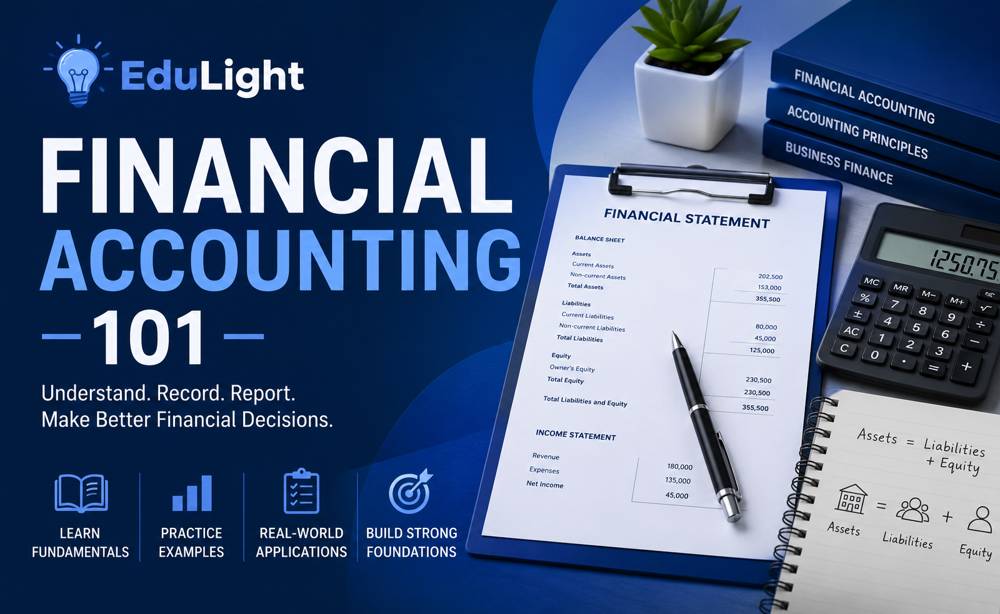
About Course
Master the language of business, one step at a time
Every business, from a one-person consultancy to a JSE-listed company, runs on financial accounting. This beginner-friendly, university-level course shows you how businesses record, summarise and report their finances, and how to read the financial statements that come out of that process. No accounting background is needed.
Instead of memorising rules, you will learn to understand why the system works, then apply it. Every topic moves from clear explanation, to worked examples with real numbers, to practice. Along the way you follow one running case study: Karoo Consulting, a small Johannesburg business, so the ideas build into a single story rather than a collection of disconnected exercises.
What the course covers
The course has 12 sequential topics, each preparing you for the next:
- Introduction to Financial Accounting
- The Accounting Equation
- Understanding Accounts
- Debits and Credits
- The Double-Entry System
- Source Documents and Transactions
- Journals
- Ledgers and T-Accounts
- The Trial Balance
- Adjustments and Accrual Concepts
- Basic Financial Statements
- Putting It All Together
How you will learn
- Short, structured lessons with learning objectives, worked examples and key takeaways.
- Topic quizzes with a mix of question types and unlimited attempts, so you can practise until you are confident.
- Practical assignments where you classify accounts, analyse transactions, record journal entries, prepare a trial balance and produce financial statements.
- A final Mastery Test of 10 questions, from easy to hard, to check that you can put the whole accounting cycle together.
By the end of this course
You will be able to analyse business transactions, record them using double-entry bookkeeping, take them through the full accounting cycle, prepare basic financial statements, and interpret the results with confidence. You will also have the solid foundation you need to move on to more advanced accounting and finance studies.
Start with Topic 1 today and take the first step towards understanding the language of business.
Course Content
Introduction to Financial Accounting
What Is Financial Accounting?
The Purpose of Financial Accounting
Users of Accounting Information
Basic Accounting Terminology
Financial Accounting in the Real World
Quiz — Introduction to Financial Accounting
The Accounting Equation
Understanding Accounts
Debits and Credits
The Double-Entry System
Source Documents and Transactions
Journals
Ledgers and T-Accounts
The Trial Balance
Adjustments and Accrual Concepts
Basic Financial Statements
Putting It All Together
Earn a certificate
Add this certificate to your resume to demonstrate your skills & increase your chances of getting noticed.
Student Ratings & Reviews